You’ve Tried Everything. Nothing Sticks.
If you’ve been dealing with hair thinning, a sensitive scalp, or stubborn shedding, chances are you’ve been down the rabbit hole. The egg-and-olive-oil masks. The biotin supplements. The expensive shampoo that promised miracles and delivered disappointment. The forum threads where everyone had a different answer.
The frustrating truth is that most popular scalp advice is either generic, unsubstantiated, or directly contradicted by the published research.
Here’s what the science tells us actually works.
Habit 1: Stop Washing Your Hair With Hot Water
This one sounds small. It isn’t.
Hot water strips the scalp’s natural lipid barrier — the thin protective layer of oils and fatty acids that keeps moisture in, irritants out, and your scalp microbiome (the community of bacteria that keeps your scalp healthy) in balance.1
Scalps exposed to chronic high-temperature washing can show signs of barrier disruption: increased redness, greater sensitivity, and patterns consistent with sebum gland overcompensation — the scalp producing more oil to replace what hot water keeps removing. This triggers a cycle: greasier scalp, more frequent washing, more stripping, more grease.
What to do instead: Wash with lukewarm water and finish with a 10-second cool rinse. The cool rinse closes the hair cuticle (visibly reducing frizz and improving shine) and calms scalp vasodilation. It takes almost no adjustment time to get used to, and many people find their scalp feels more comfortable for it.
Habit 2: Cleanse Your Scalp Based on Your Sebum Type — Not a Schedule
“Wash your hair twice a week” is advice that applies to approximately nobody specifically. Sebum production varies enormously between individuals — and it changes based on hormones, season, stress levels, and age.
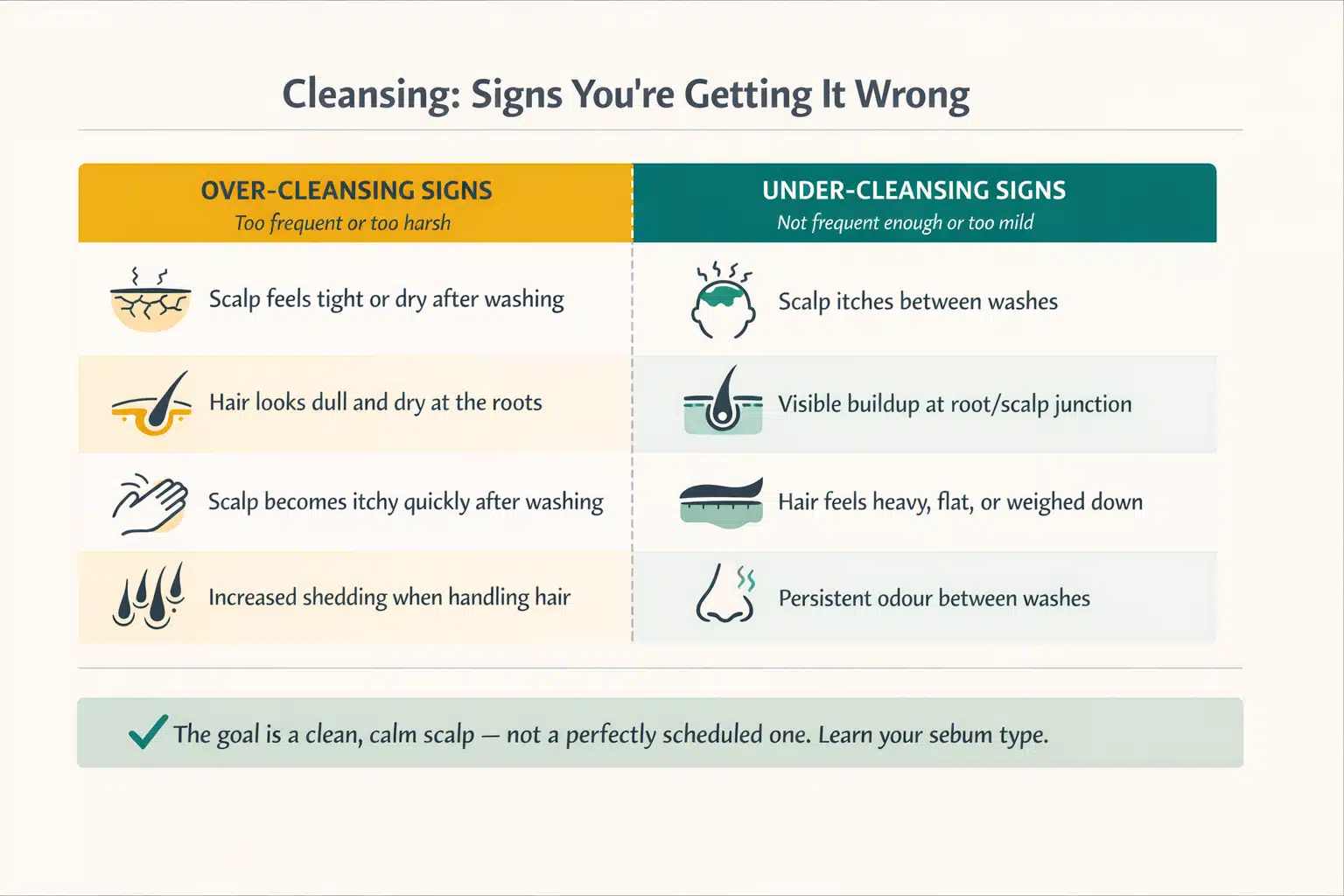
Under-cleansing is one of the factors associated with bacterial overgrowth on the scalp (seen under UV trichoscopy as porphyrin activity). Sebum left on the scalp oxidises, creates a favourable environment for bacteria like Cutibacterium acnes, and leads to follicular blockage — a direct contributor to inflammation and hair loss.2
Equally, over-cleansing a dry or sensitive scalp strips the very barrier function needed to keep inflammation in check.
What to do instead: Learn your sebum type rather than following a generic schedule. If your scalp feels oily or itchy within 24–36 hours of washing, you likely need more frequent cleansing with a gentle, sulphate-free formula. If your scalp feels tight or dry after washing, reduce frequency and switch to a milder cleanser. The goal is a clean, calm scalp — not a perfectly scheduled one.
Habit 3: Use Your Fingertips, Not Your Fingernails
During scalp washing and massage, the difference between using fingertip pads versus fingernails is significant — and not just in terms of comfort.
Scratching the scalp with fingernails causes micro-abrasions in the skin surface. These tiny wounds create entry points for bacteria, disrupt the epidermal barrier, and can spread bacterial colonisation across the scalp during washing. On a scalp that is already sensitive, this habit alone can perpetuate an inflammatory cycle that no shampoo can fully resolve.3
Scalp massage itself, done correctly, is genuinely beneficial. A 2016 study published in ePlasty found that standardised scalp massage increased hair thickness by stretching dermal papilla cells — the cells responsible for hair growth — and stimulating circulation in the follicle.4
What to do instead: Use firm but gentle circular pressure with the soft pads of your fingers during washing. Four minutes of deliberate massage at each wash is sufficient to derive circulatory benefit. If your scalp is sensitive or inflamed, keep pressure light until sensitivity reduces.
Habit 4: Take Traction Stress Seriously
“Traction alopecia” is the clinical name for hair loss caused by sustained tension on the follicle — from tight ponytails, buns, braids, extensions, and weaves. It’s the most preventable form of hair loss, and it’s far more common than most people realise.
What makes it particularly insidious is that it develops gradually. The early stages — miniaturisation of follicles along the hairline and temples — are invisible to the naked eye but clearly visible under trichoscopy. By the time visible thinning appears, follicular damage may already be under way.5
This applies beyond tight styles. Certain hair accessories — elastic bands with metal clasps, very tight clips — applied daily to the same location can cause localised follicular stress over months and years.
What to do instead: Vary where you position ponytails and buns day to day. Use fabric-covered hair ties with no metal. Allow your hair to be completely loose for at least a portion of each day. If you wear extensions regularly, ask your stylist to check your hairline for early signs of traction at each appointment, and see a GP or dermatologist if you notice thinning along your hairline or temples.
Habit 5: Address the Basics That Affect Your Scalp From Inside
The scalp is skin. It responds to what you eat, how much you sleep, and how much stress you carry — in the same way the rest of your body does, just with the added complexity of producing hair.
Three nutritional factors consistently appear in the clinical literature as significant contributors to hair loss, particularly in women:
Iron and ferritin. Low ferritin (stored iron) is one of the most common and most overlooked drivers of diffuse hair shedding in women, particularly those approaching or in menopause. Hair follicles require iron for the rapid cell division involved in the growth phase.6
Protein. Hair is approximately 95% keratin — a structural protein. Inadequate dietary protein directly limits the raw material available for hair production. Crash diets and very low-calorie eating are well-documented triggers of telogen effluvium — a form of diffuse shedding where a large proportion of hairs simultaneously shift into the resting/shedding phase.7
Omega-3 fatty acids. Emerging research suggests omega-3s play a role in reducing scalp inflammation and supporting the sebum quality that keeps the follicle environment healthy.8
What to do instead: If you’re experiencing significant hair loss, ask your GP to check ferritin specifically (not just general iron), alongside thyroid function. These are inexpensive, widely available tests that rule out systemic causes before you spend money on topical treatments.
The Common Thread
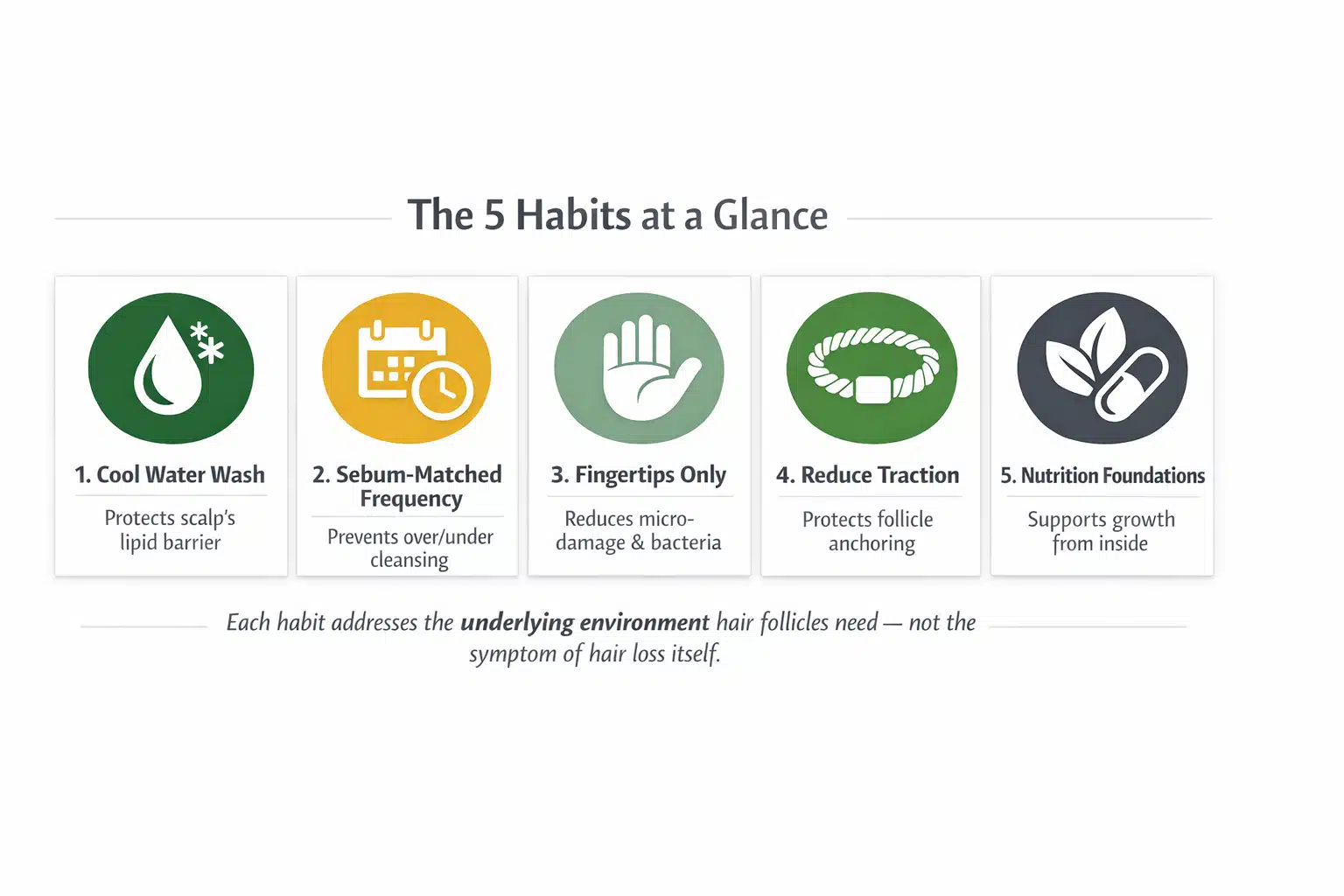
Every one of these habits addresses the underlying environment that hair follicles need to thrive — not the symptom of hair loss itself. That’s the distinction between habits that make a genuine difference and products that provide temporary relief.
Knowing your own scalp — how quickly it gets oily, whether it feels tight or itchy after washing, how it responds to the way you wear your hair — helps you see which of these habits matter most for you.
That’s where Scalp Score starts: five short questions give you a Scalp Score straight away, with no sign-up, and the wash-day check-in helps you keep track of how your scalp feels from one wash to the next.
References
- Draelos, Z.D. (2010). The biology of hair care. Dermatologic Clinics, 28(2), 161–167. Read the study
- Ma, L., et al. (2019). Sensitive scalp is associated with excessive sebum and perturbed microbiome. Journal of Cosmetic Dermatology, 18(3), 922–928. Read the study
- Polak-Witka, K., et al. (2020). The role of the microbiome in scalp hair follicle biology and disease. Experimental Dermatology, 29(3), 286–294. Read the study
- Koyama, T., et al. (2016). Standardized scalp massage results in increased hair thickness by inducing stretching forces to dermal papilla cells in the subcutaneous tissue. ePlasty, 16, e8. Read the study
- Haskin, A., & Aguh, C. (2016). All hairstyles are not created equal: What the dermatologist needs to know about black hairstyling practices and the risk for traction alopecia. Journal of the American Academy of Dermatology, 75(3), 606–611. Read the study
- Trost, L.B., Bergfeld, W.F., & Calogeras, E. (2006). The diagnosis and treatment of iron deficiency and its potential relationship to hair loss. Journal of the American Academy of Dermatology, 54(5), 824–844. Read the study
- Malkud, S. (2015). Telogen Effluvium: A Review. Journal of Clinical and Diagnostic Research, 9(9), WE01–WE03. Read the study
- Le Floc’h, C., et al. (2015). Effect of a nutritional supplement on hair loss in women. Journal of Cosmetic Dermatology, 14(1), 76–82. Read the study