The Hidden World on Your Head
Right now, as you’re reading this, billions of microorganisms are living, feeding, and interacting on your scalp. This isn’t science fiction — it’s cutting-edge science that’s revolutionising how we understand and treat hair and scalp health.
Welcome to the scalp microbiome: an invisible ecosystem that determines whether you’ll have healthy hair, deal with persistent dandruff, experience inflammation, or face early hair loss. And here’s the remarkable part: most people have no idea it exists.
What Is the Scalp Microbiome?
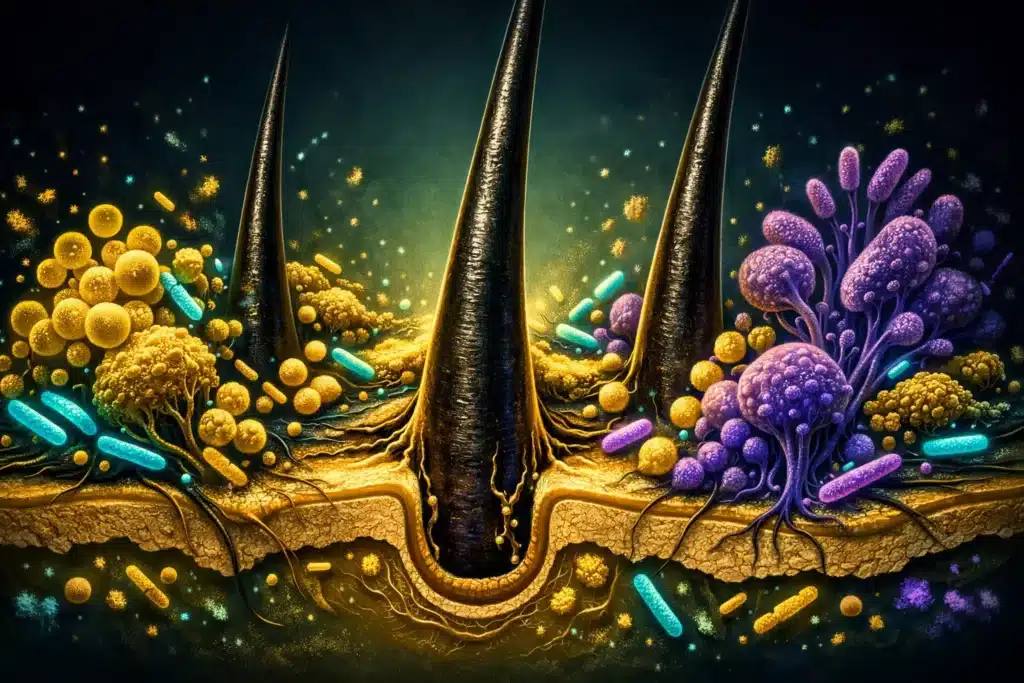
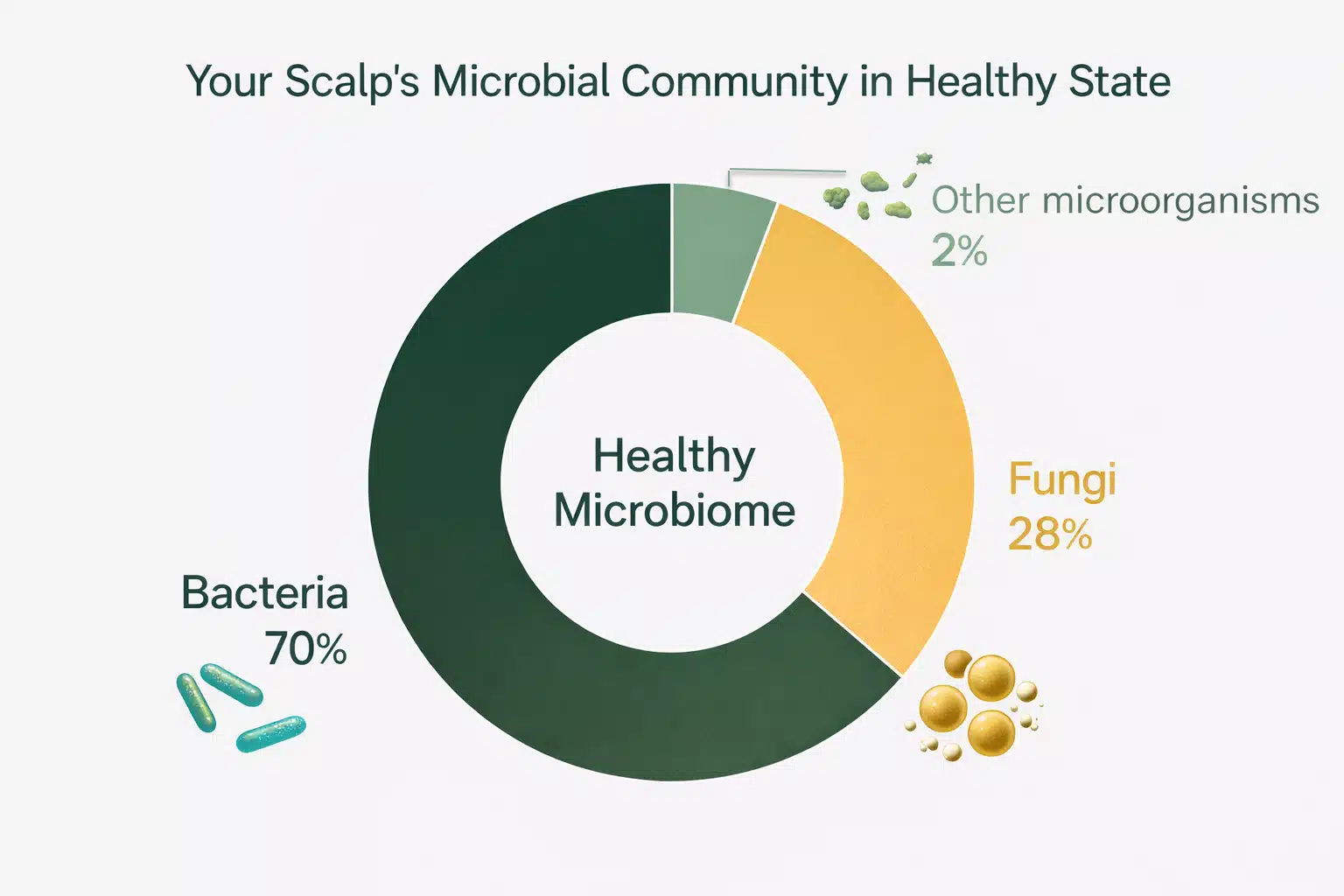
Your scalp microbiome is a complex community of bacteria, fungi, viruses, and other microorganisms that naturally inhabit your scalp and hair follicles. Think of it as a microscopic rainforest — diverse, interconnected, and absolutely critical to the health of its environment.1
Why Your Scalp Microbiome Matters
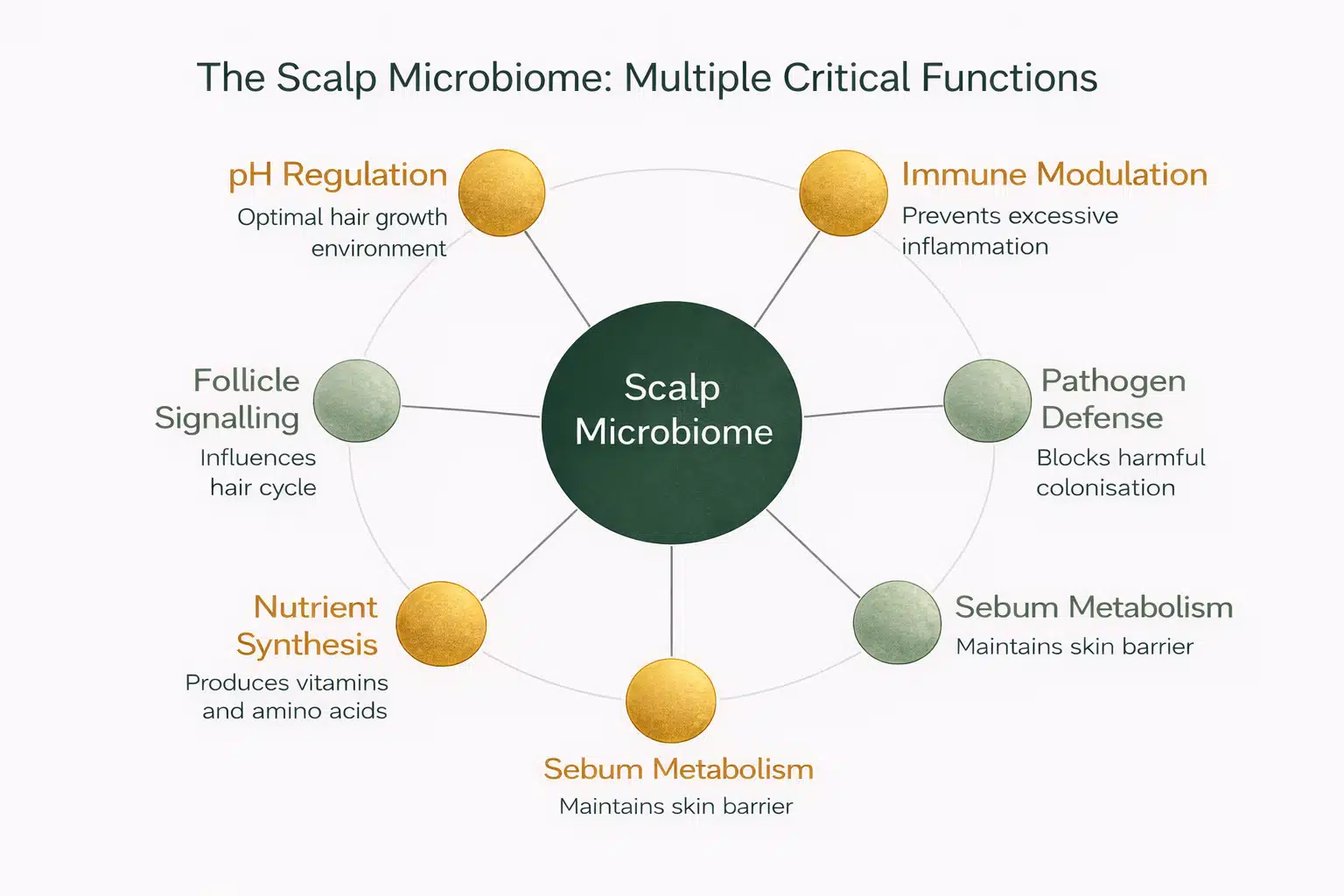
Unlike your gut microbiome, which has received extensive media attention, the scalp microbiome remains largely unknown to the public. Yet research published over the past five years has revealed it plays critical roles in:13
1. Maintaining Scalp pH
Your scalp naturally maintains an acidic pH of 5-6, which is optimal for healthy hair growth. Beneficial bacteria like Cutibacterium acnes metabolise sebum and produce short-chain fatty acids that help maintain this ideal pH.4
2. Protecting Against Pathogens
A diverse, balanced microbiome acts as your scalp’s first line of defence. Research shows that Staphylococcus epidermidis produces specific compounds that actively protect against pathogenic bacteria.1
3. Regulating Inflammation
Your scalp microbiome constantly communicates with your immune system. A balanced microbiome maintains immune tolerance, whilst dysbiosis (microbial imbalance) triggers inflammatory responses.
4. Influencing Hair Growth
Emerging research suggests the scalp microbiome directly affects hair follicle cycling. A 2019 study found that sensitive scalp is associated with “excessive sebum and perturbed microbiome,” linking microbial balance to overall scalp health.5
When the Balance Breaks: Microbiome Dysbiosis
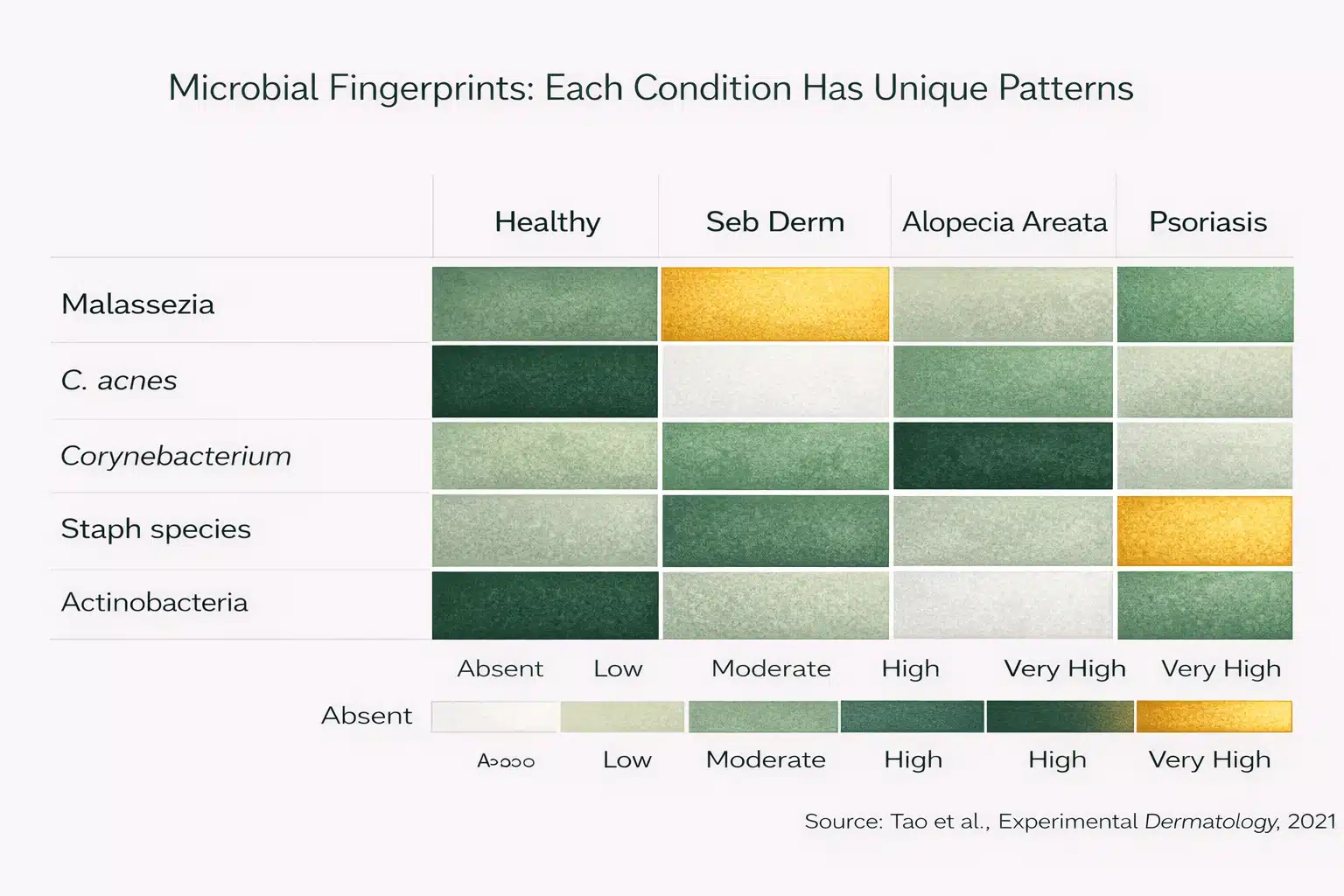
Here’s where understanding becomes powerful: specific microbial imbalances cause specific scalp conditions. Research published in multiple peer-reviewed journals has mapped these patterns with precision.67
Seborrheic Dermatitis: The Malassezia Explosion
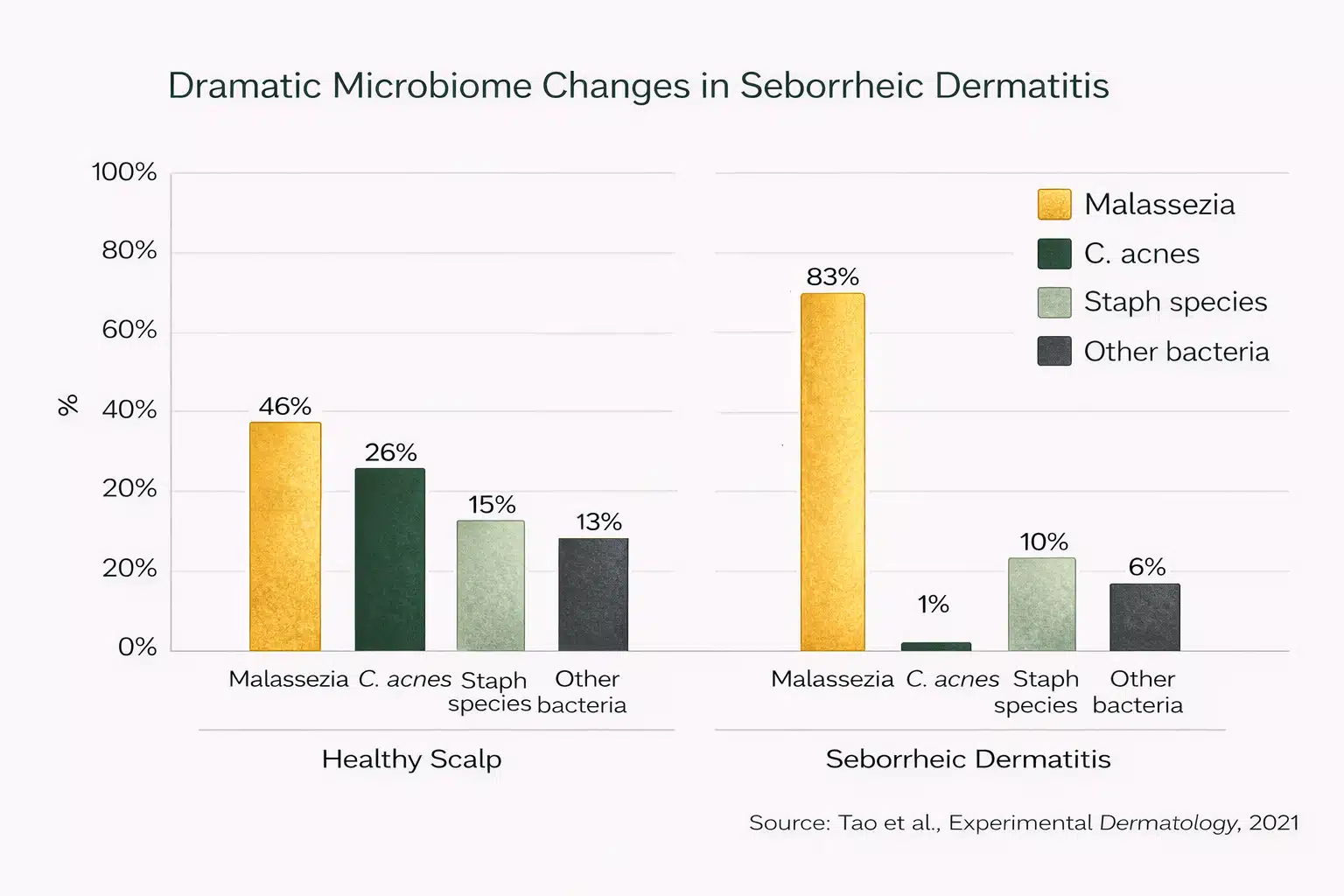
In healthy scalps, Malassezia fungi comprise about 46% of the total microbiota. But in seborrheic dermatitis, this skyrockets to 83%. Simultaneously, beneficial Cutibacterium acnes bacteria plummet from 26% to just 1%.6
Alopecia Areata: A Different Pattern
Research published in Microorganisms found distinct microbiome signatures in alopecia areata patients:8
- Higher proportion of: Corynebacterium species, actinobacteria, firmicutes
- Lower proportions of: Staphylococcus caprae
- Correlation: Lower S. caprae levels associated with worse clinical outcomes
Scalp Psoriasis: Yet Another Signature
Patients with scalp psoriasis show decreased prevalence of Actinobacteria and Propionibacterium, with increased levels of Firmicutes, Staphylococcus, and Streptococcus.9
The Groundbreaking Coconut Oil Study
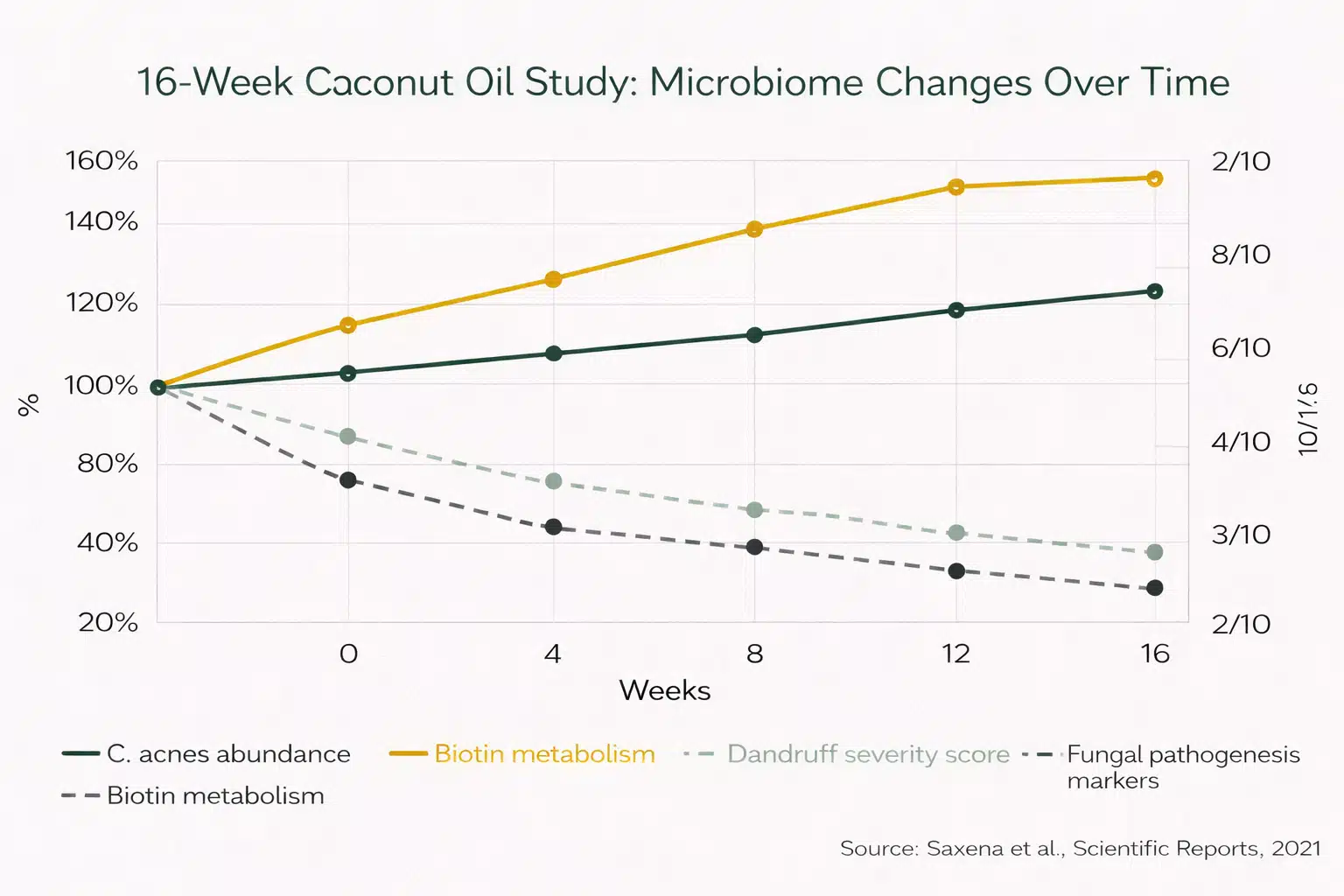
One of the most fascinating microbiome studies examined what happens when you intentionally try to shift the scalp microbiome. Published in Scientific Reports, researchers conducted a 16-week study with 140 women testing topical coconut oil applications.10
The results were remarkable:
- Increased abundance of beneficial Cutibacterium acnes and Malassezia globosa
- These increases were negatively correlated with dandruff (more beneficial bacteria = less dandruff)
- Enrichment of healthy scalp-related bacterial pathways
- Increased biotin metabolism (essential for hair health)
- Decreased fungal pathogenesis pathways
Why Most People Know Nothing About This
Despite these groundbreaking discoveries, public awareness of the scalp microbiome remains minimal:
- The gut microbiome got all the attention — probiotic yogurts and gut-brain connections became household concepts whilst the scalp was overlooked
- It’s invisible — unlike gut health, scalp microbiome effects manifest as dandruff or itching, which people attribute to other causes
- Medical training lag — the science has advanced faster than medical education has adapted
- No consumer products yet — until recently, there were no scalp-specific microbiome tests available
Treatments That Target the Microbiome
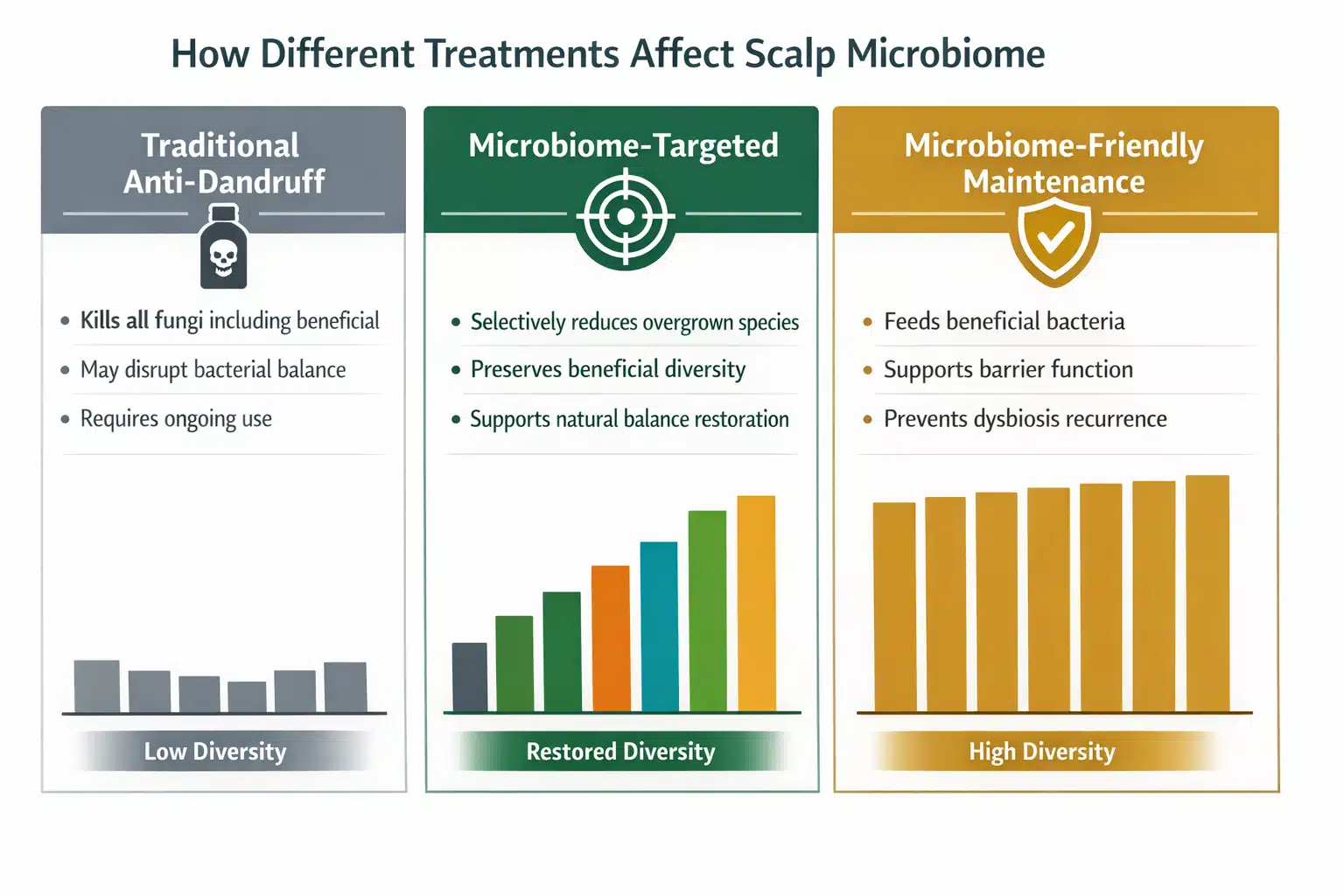
Understanding microbiome imbalance enables smarter treatment selection:11
1. Selective Antimicrobials
Rather than broad-spectrum approaches that kill everything, modern treatments can selectively reduce overgrown organisms whilst preserving beneficial species. For example, propanediol caprylate is activated specifically by Malassezia enzymes, reducing fungal overgrowth whilst simultaneously shifting bacterial microbiota toward healthier balance.
2. Microbiome-Friendly Products
Research noted: “Promoting a healthy and balanced environment may help provide the optimal conditions for healthier emerging hairs.”4 Products certified as “microbiome-friendly” maintain diversity, don’t disrupt beneficial populations, and support skin barrier function.
3. Prebiotics and Postbiotics
Similar to gut health strategies, prebiotics feed beneficial bacteria whilst postbiotics provide compounds produced by good bacteria. Recent scalp care innovations incorporate these approaches to nourish healthy microbial communities.
What This Means for You
- Your symptoms have a microbial component — whether it’s persistent dandruff, sensitive scalp, or inflammatory hair loss, microbiome dysbiosis is likely playing a role
- Not all treatments are created equal — products that disrupt your entire microbiome may provide short-term relief but create long-term dependency
- Symptoms alone don’t name the imbalance — the microbial patterns above come from laboratory analysis in research studies, so for persistent symptoms a GP or dermatologist can help work out which condition is behind them
- You can support your microbiome through microbiome-friendly products, appropriate shampooing frequency, stress management, and avoiding harsh chemicals
The Bottom Line
Your scalp hosts a complex, sophisticated ecosystem that fundamentally determines your hair and scalp health. This isn’t alternative medicine or pseudoscience — it’s cutting-edge research published in the world’s leading dermatology journals.
The microbiome awareness gap means millions of people are treating symptoms without understanding their microbial cause. They’re using broad-spectrum products when precision is needed. They’re fighting their own ecosystem rather than working with it.
The future of scalp health is microbiome-informed. That future is already here — most people just don’t know it yet. Now you do.
References
- Polak-Witka, K., et al. (2020). The role of the microbiome in scalp hair follicle biology and disease. Exp Dermatol, 29(3), 286-294. Read study
- News Medical. (2025). Scalp Microbiome Explained. Read article
- Jin, Y., et al. (2025). Unlocking the secrets of the hair microbiome. ScienceDirect. Read study
- Lee, J., et al. (2024). New Topicals to Support a Healthy Scalp While Preserving the Microbiome. PMC. Read study
- Ma, L., et al. (2019). Sensitive scalp is associated with excessive sebum and perturbed microbiome. J Cosmet Dermatol, 18(3), 922-928. Read study
- Tanaka, A., et al. Quantitative scalp microbiome study in normal individuals and in subjects with dandruff and SD. Referenced in multiple reviews.
- Tao, R., et al. (2021). Skin microbiome alterations in seborrheic dermatitis and dandruff. Exp Dermatol, 30(10), 1546-1553. Read study
- Won, E. J., et al. (2022). A potential predictive role of the scalp microbiome profiling in patients with alopecia areata. Microorganisms, 10(5), 864. Read study
- Polak-Witka, K., et al. (2020). The role of the microbiome in scalp hair follicle biology and disease. Exp Dermatol. Read study
- Saxena, R., et al. (2021). Longitudinal study of the scalp microbiome suggests coconut oil to enrich healthy scalp commensals. Sci Rep, 11(1), 7220. Read study
- Schwartz, J. R., et al. (2024). Scalp Microbiome and Dandruff — Exploring Novel Biobased Esters. MDPI. Read study
- Abdel Hay, R., et al. (2024). Scalp microbiome: a guide to better understanding scalp diseases and treatments. PubMed. Read study