You have probably done this. Your scalp was uncomfortable — itchy, tight, occasionally burning — and you reached for a new shampoo. When that one didn’t help, you tried another. Perhaps you moved to a sulphate-free formula, then a fragrance-free one, then something labelled specifically for sensitive skin. You may have added a scalp serum, a weekly treatment, a different conditioner. At some point, you either found temporary relief or arrived at a quiet conclusion: your scalp is just difficult.
It isn’t. But there is a good chance the products you were using were never equipped to help — not because they were poorly made, but because they were designed for something else entirely.
What Cosmetics Are Legally Designed to Do
The EU Cosmetics Regulation 1223/2009 defines a cosmetic product as any substance or mixture intended to be applied to the external parts of the human body for the purpose of cleaning, perfuming, changing the appearance of, and/or correcting body odours, and/or protecting or keeping them in good condition.1
That definition is precise — and its precision matters. Notice what is absent: treatment. Cosmetics are not permitted to make therapeutic claims under European law. They cannot be formulated or marketed to treat a physiological condition. A shampoo, regardless of how it is priced or positioned, is legally and functionally a cleansing agent. A conditioner is a surface modifier. A scalp serum marketed for “sensitivity” is, by regulatory definition, cosmetic.
This is not a criticism of the consumer haircare industry. It is doing exactly what it was designed and regulated to do. The problem arises when a clinical condition — and sensitive scalp, affecting 44.2% of the population, is a clinical condition — is addressed with cosmetic-grade solutions.2
That is not a product selection problem. It is a category problem.
What Sensitive Scalp Actually Involves
Understanding why this matters requires looking at what sensitive scalp involves at a biological level. Research published in the Journal of Cosmetic Dermatology identified that sensitive scalp is significantly associated with excessive sebum production and a perturbed scalp microbiome.3 These are not surface phenomena. Sebum dysregulation occurs at the level of the sebaceous gland, which sits within the dermis. Microbiome disruption involves the balance of microbial communities living at and within the follicular environment — invisible to the naked eye and inaccessible to topical cleansing agents.
No cosmetic product is formulated to address either of these mechanisms. A shampoo removes sebum and product residue from the hair shaft and scalp surface. It does not regulate sebaceous gland activity. A conditioner smooths the cuticle and reduces static. It does not restore microbial balance. These are not limitations born of poor formulation — they are the structural boundaries of the cosmetic category, reinforced by law.
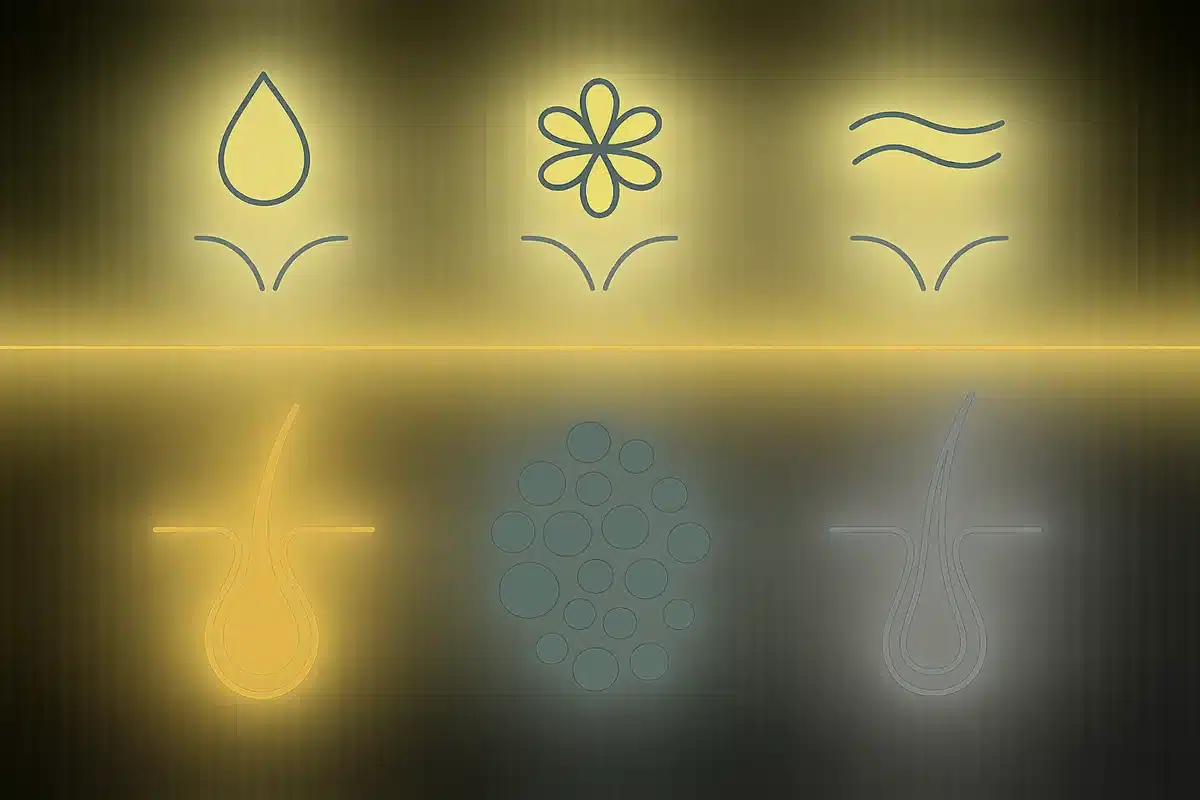
There is a further irony embedded in the research. A study published in Frontiers in Medicine found a possible association between sensitive scalp and the use of hair conditioners — suggesting that some of the products most commonly reached for in response to scalp discomfort may contribute to, or worsen, the underlying condition.4 The category that feels most soothing may, in some cases, be sustaining the problem.
The Self-Treatment Loop
When a clinical need meets a cosmetic solution, the predictable outcome is a cycle: discomfort, product switch, brief or partial change, return of symptoms, another switch. This loop is not the result of careless decision-making or insufficient effort. It is the structurally foreseeable outcome of applying tools that were built for a different purpose.
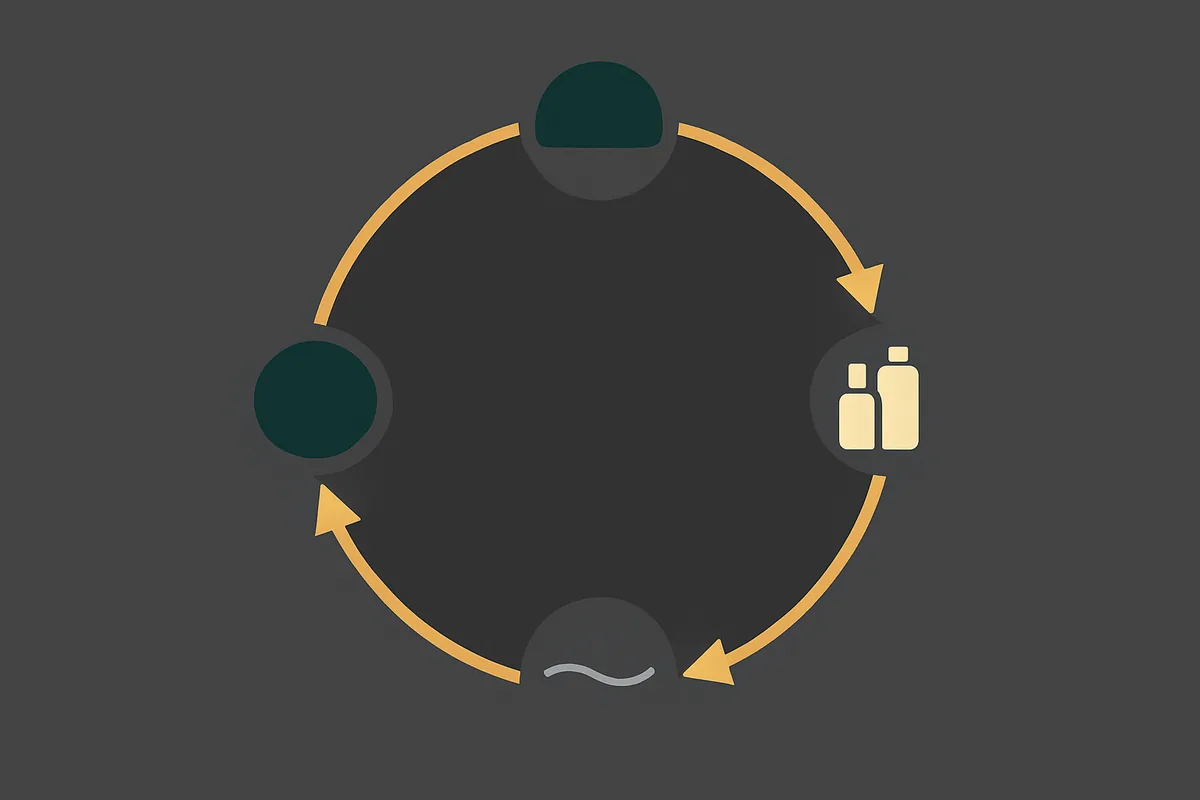
The epidemiological data reflects this precisely. Sensitive scalp affects nearly one in two people globally, yet remains one of the most underdiagnosed conditions in dermatological practice.5 Of those experiencing symptoms, the majority have never received a clinical assessment. Most have, instead, spent years in this loop — cycling through a product category that was never designed to resolve what they were experiencing.
This is worth stating plainly. If you have tried multiple products and not found lasting relief, that outcome is not evidence that your scalp is unusually resistant or that you made poor choices. It is evidence that you were operating in the wrong category.
What Changes When the Category Changes
The shift from cosmetic to clinical is not just regulatory — it changes what becomes visible. Modern medical-grade trichoscopy can detect inflammation patterns, follicular disruption, and microbiome-associated changes that are invisible to the naked eye and entirely undetectable through any surface-level product interaction. Our earlier overview of the sensitive scalp evidence base documents what this level of assessment reveals across different presentations.
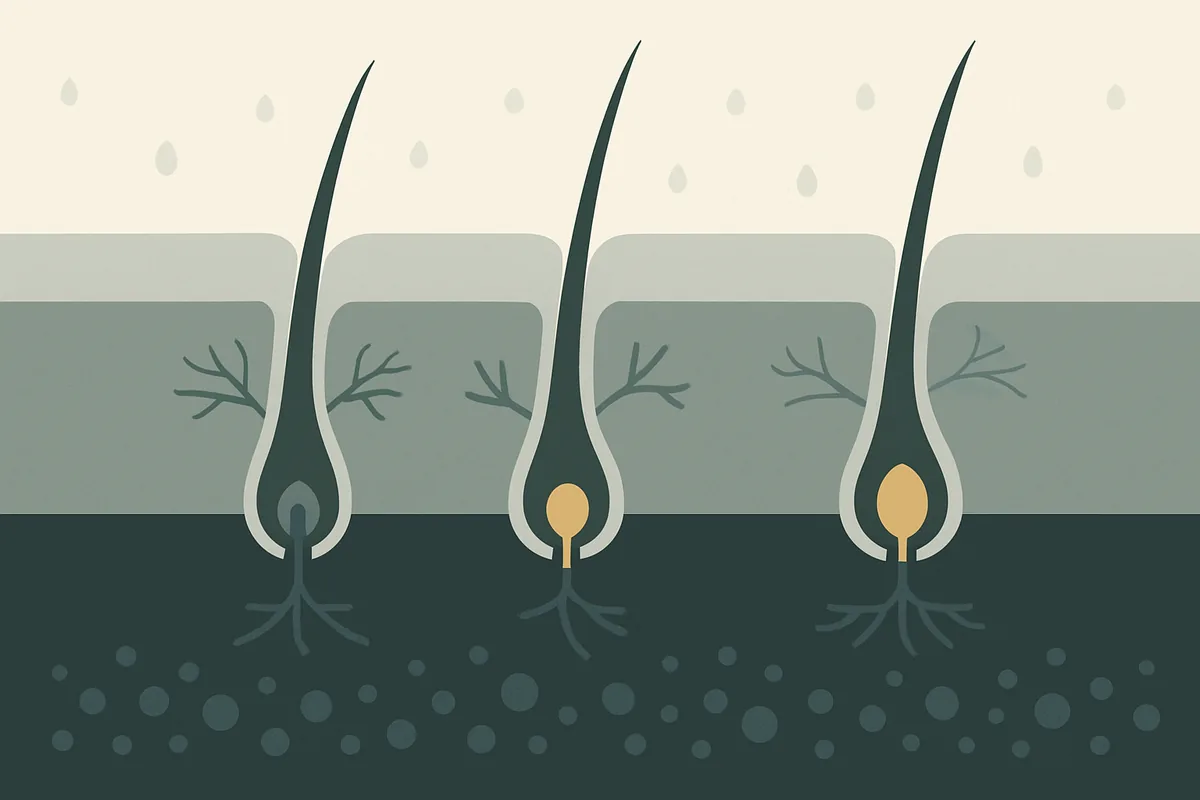
What clinical assessment offers is not simply more precise information — it is a different kind of question. Instead of “which product should I try next?”, the question becomes “what is actually happening, and what does the evidence suggest about it?” That shift — from selection to understanding — is where the loop ends.
A documented record means that later decisions are not made in the dark. Scalp Score helps you keep one: a check-in on each wash day and a Photo Journal of your own scalp photographs help you keep track of how your symptoms change over time, and the Product Checker reads a label — by barcode, name or a photo of the ingredient list — to say what suits your scalp, what to watch and how to use it. That matters, given the conditioner finding above. The goal is not another product to try. It is the information that makes product decisions — and a conversation with a GP or dermatologist — more useful.
The Bottom Line
The consumer haircare industry is large, well-resourced, and genuinely effective at what it does. It cleanses, conditions, and cares for the hair shaft and scalp surface. It was not built to address sensitive scalp at a clinical level, and European regulation ensures it cannot claim to do so.
For the 44.2% of people whose scalp symptoms may reflect microbiome disruption, sebum dysregulation, or underlying inflammatory activity, the relevant question was never “which shampoo?” It was always “what is happening beneath the surface?” Answering that question requires a different category of tool — and a different category of conversation about your scalp health. If your symptoms persist, that conversation is with a GP or dermatologist.
References
- European Parliament & Council of the European Union. (2009). Regulation (EC) No 1223/2009 on cosmetic products. Official Journal of the European Union, L 342, 59–209. Read regulation
- Misery, L., et al. (2008). Sensitive scalp: does this condition exist? An epidemiological study. Contact Dermatitis, 58(4), 234–238. Read study
- Ma, L., et al. (2019). Sensitive scalp is associated with excessive sebum and perturbed microbiome. Journal of Cosmetic Dermatology, 18(3), 922–928. Read study
- Brenaut, E., et al. (2021). Sensitive scalp: a possible association with the use of hair conditioners. Frontiers in Medicine, 7, 596544. Read study
- Misery, L., et al. (2024). Perceived prevalence of a sensitive scalp: A worldwide study. Journal of the European Academy of Dermatology and Venereology, 38(2), e191–e192. Read study