The Most Common Misdiagnosis in Scalp Health
Research published in the StatPearls medical database identifies misdiagnosis as the most common problem associated with both infantile and adult seborrheic dermatitis.1 Yet half of all adults will experience either dandruff or seborrheic dermatitis at some point in their lives2 — meaning millions are potentially misdiagnosing and mistreating their condition right now.
Understanding the Confusion: Dandruff vs. Seborrheic Dermatitis
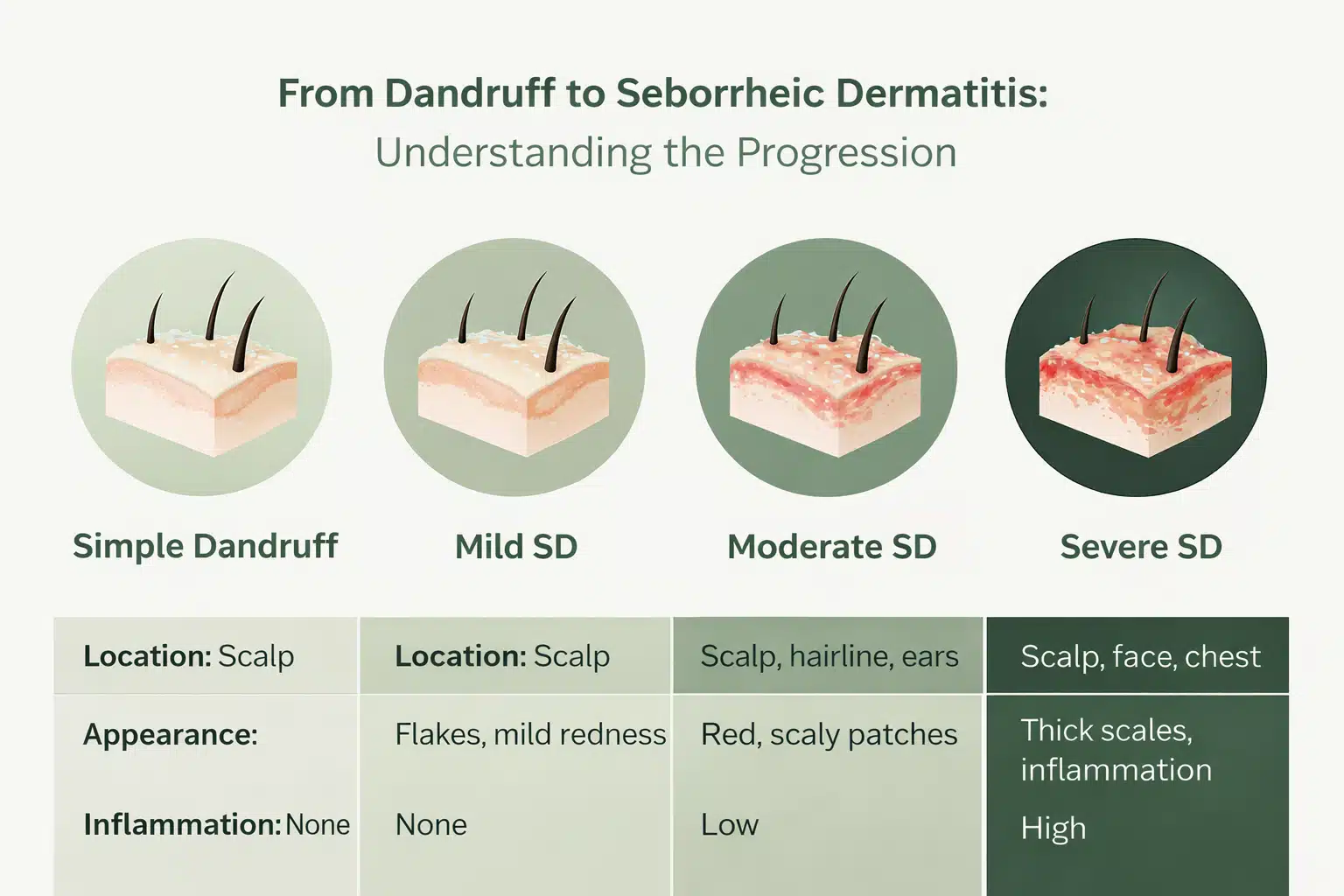
Here’s what makes this tricky: dandruff and seborrheic dermatitis exist on a spectrum of the same disease process. They share common features and respond to similar treatments, but differ significantly in severity and location.2
Dandruff: The Basics
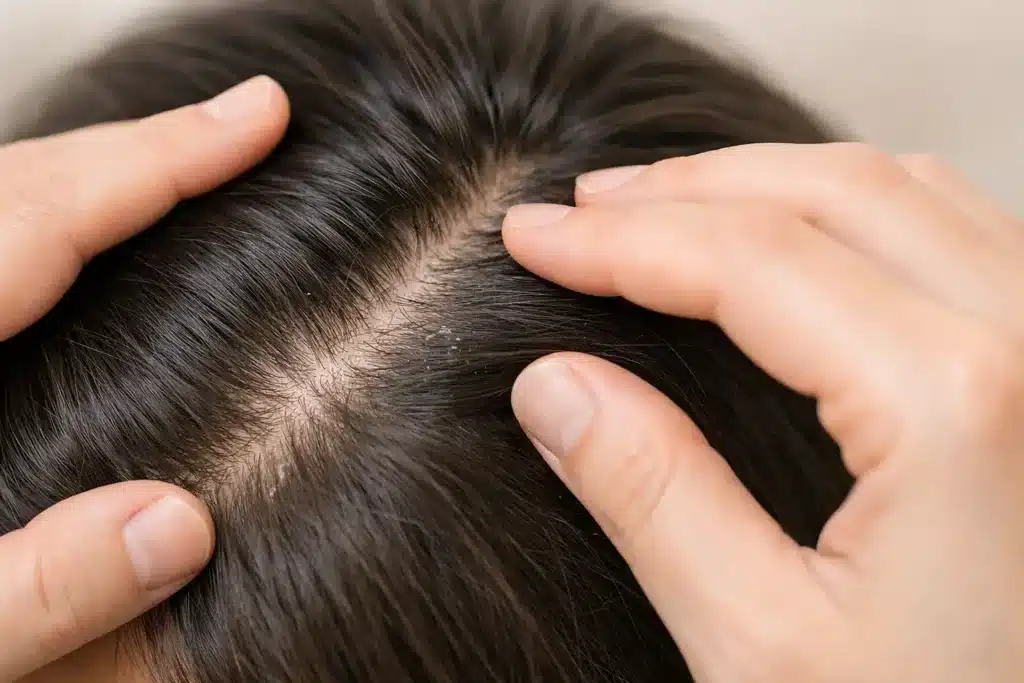
Dandruff is:
- Restricted to the scalp only
- Characterised by itchy, flaking skin
- Shows white-to-yellowish flakes (usually dry)
- Has no visible inflammation
- Generally responds to over-the-counter anti-dandruff shampoos
Prevalence: Affects up to 50% of the adult population worldwide3
Seborrheic Dermatitis: The More Serious Cousin
Seborrheic dermatitis includes:
- Can affect scalp AND other areas (face, chest, ears, behind ears)
- Shows flaking, scaling, and visible inflammation
- Presents with greasy or oily yellowish scales
- Displays marked redness (erythema)
- Often requires prescription treatment
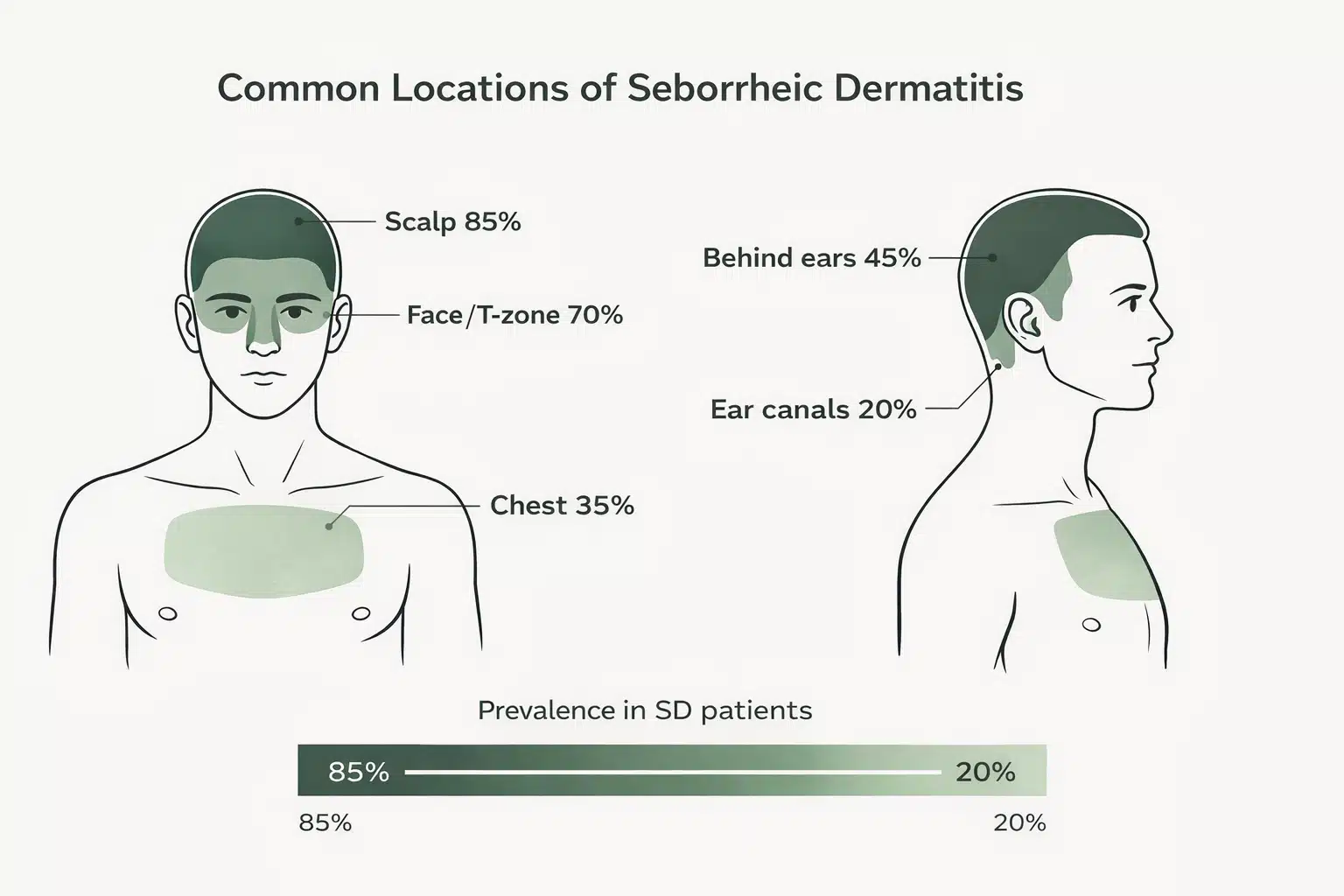
The Misdiagnosis Problem: Why It Matters
According to research, the most common problems associated with both infantile and adult seborrheic dermatitis relate to misdiagnosis of the condition.1 This isn’t just a technical issue — it has real consequences:
1. Wrong Treatment, Wasted Time
When you treat seborrheic dermatitis as simple dandruff, you’re using products that may provide partial relief but won’t address the underlying inflammation. Patients report spending months or even years using anti-dandruff shampoos that barely help.
2. Progressive Worsening
Untreated seborrheic dermatitis doesn’t just stay static — it can worsen over time. What starts as scalp flaking can spread to the face, ears, and chest.
3. Quality of Life Impact
The Skin Appendage Disorders journal notes that seborrheic dermatitis can have “a great impact on patient quality of life, depending on the intensity of unpleasant symptoms.”4
4. Misdiagnosis in Reverse
The research also reveals that seborrheic dermatitis patients were often diagnosed as having contact dermatitis,5 leading to completely incorrect treatment approaches.
The Diversity Factor: Misdiagnosis in Patients of Colour
Here’s a critical issue that’s often overlooked: misdiagnosis or delayed diagnosis of patients with skin of colour happens frequently.5 Traditional medical training teaches that seborrheic dermatitis presents with “redness” — but on darker skin tones, this appears as tan or brown discolouration, grey or purple hues, or hypopigmentation.
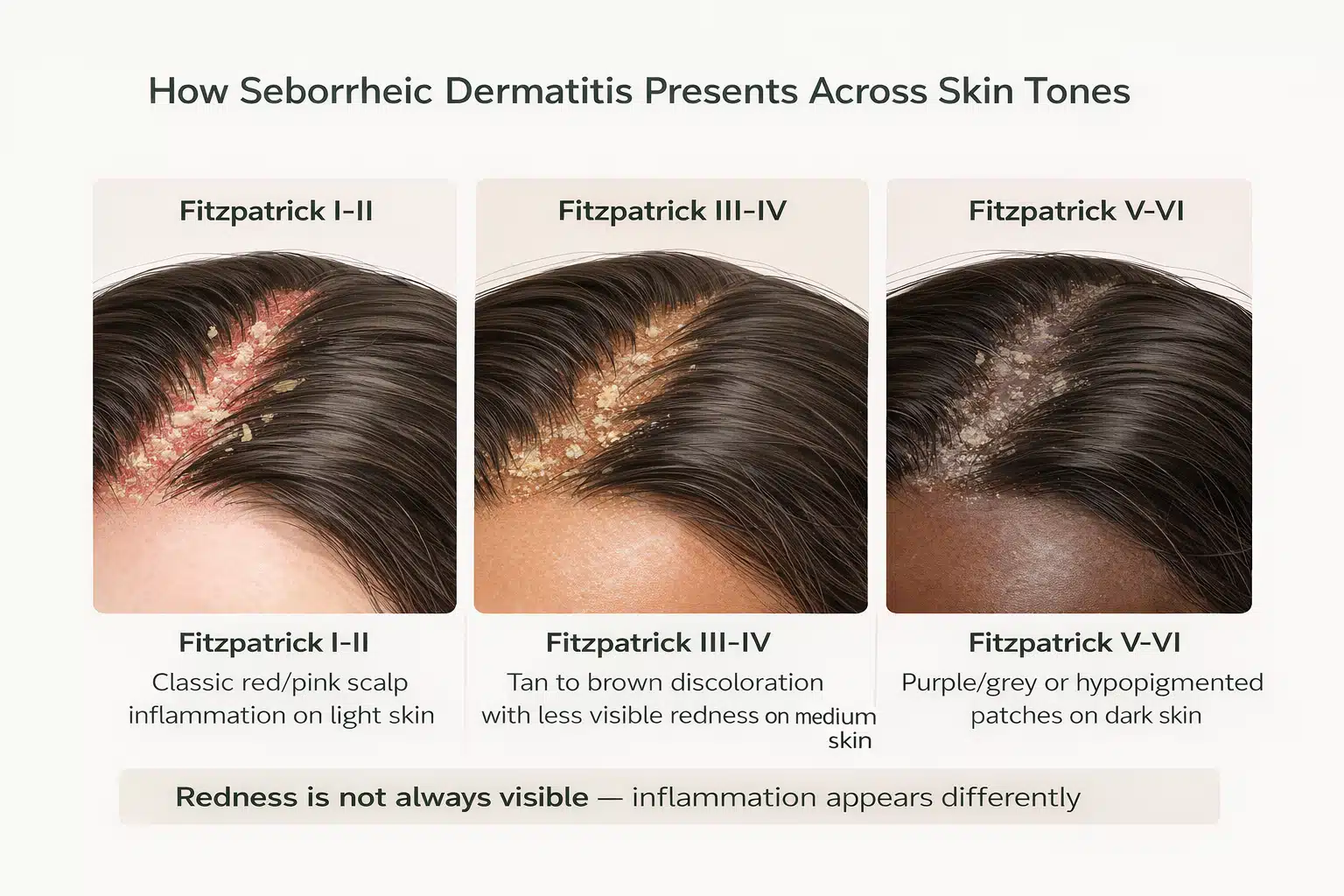
Research shows seborrheic dermatitis has a 6.5% incidence in African Americans, making it one of the top five most common skin conditions in this population.5 This disparity, combined with presentation differences, contributes to delays in diagnosis and treatment.
The Science: What Causes the Spectrum?
The Role of Malassezia
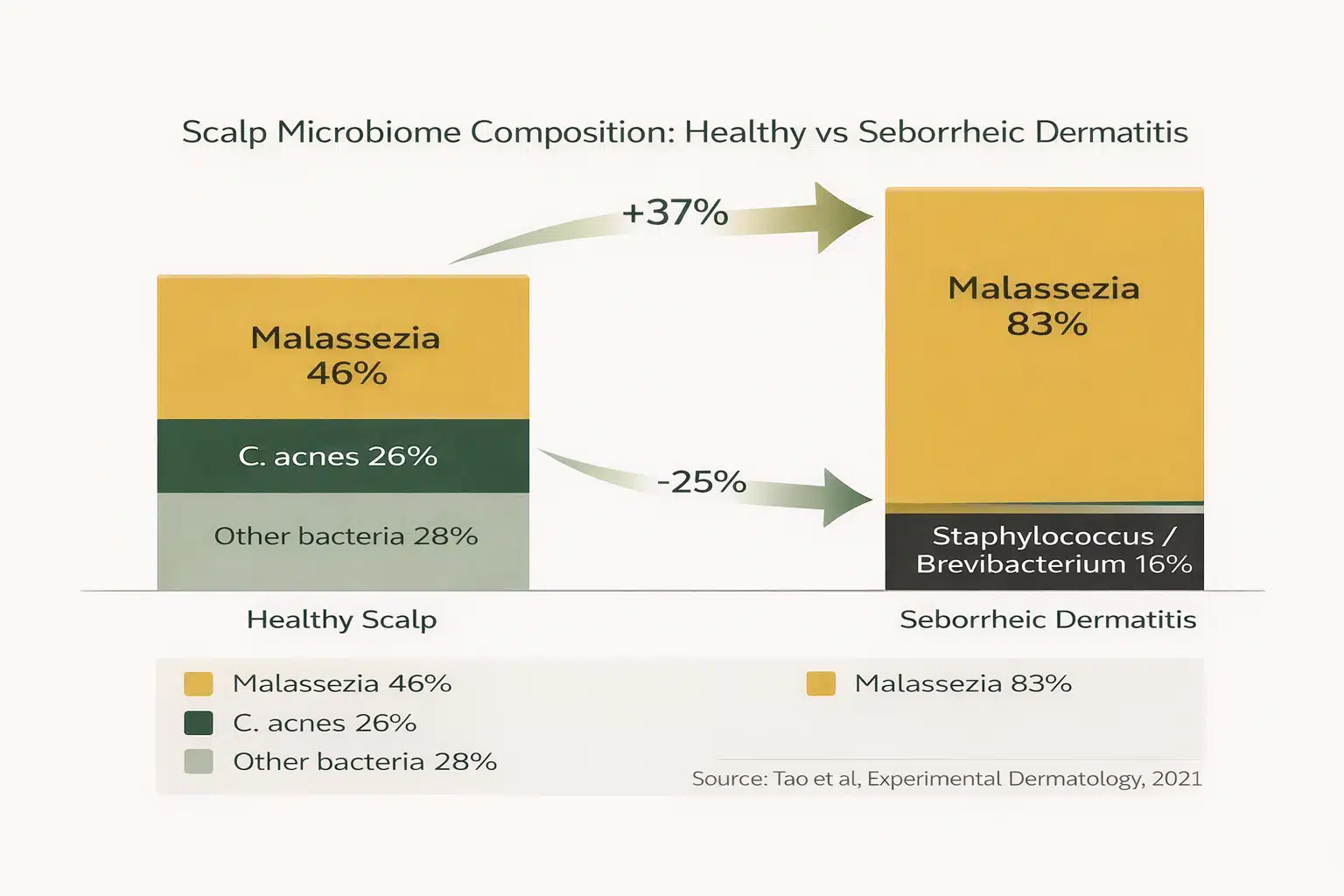
Both dandruff and seborrheic dermatitis involve a yeast called Malassezia that naturally lives on our scalp. Research shows:2
- In normal individuals: Malassezia comprises 46% of total scalp microbiota
- In dandruff sufferers: This increases to 74%
- In seborrheic dermatitis patients: It reaches 83%
The Microbiome Connection
A comprehensive review published in Experimental Dermatology documented specific microbial patterns:7
Increased abundance of: Malassezia restricta, Staphylococcus, Brevibacterium species
Decreased levels of: Cutibacterium acnes (beneficial bacteria), protective bacterial diversity
Other Conditions That Mimic Dandruff
Adding to the confusion, several other scalp conditions present with similar symptoms:1
- Scalp Psoriasis — Thicker, more defined plaques with silvery-white scales
- Contact Dermatitis — Reaction to hair products, dyes, or shampoos
- Atopic Dermatitis (Eczema) — Often part of broader atopic conditions
- Tinea Capitis (Fungal Infection) — More common in children, can cause hair loss
Treatment: Why Getting the Diagnosis Right Matters
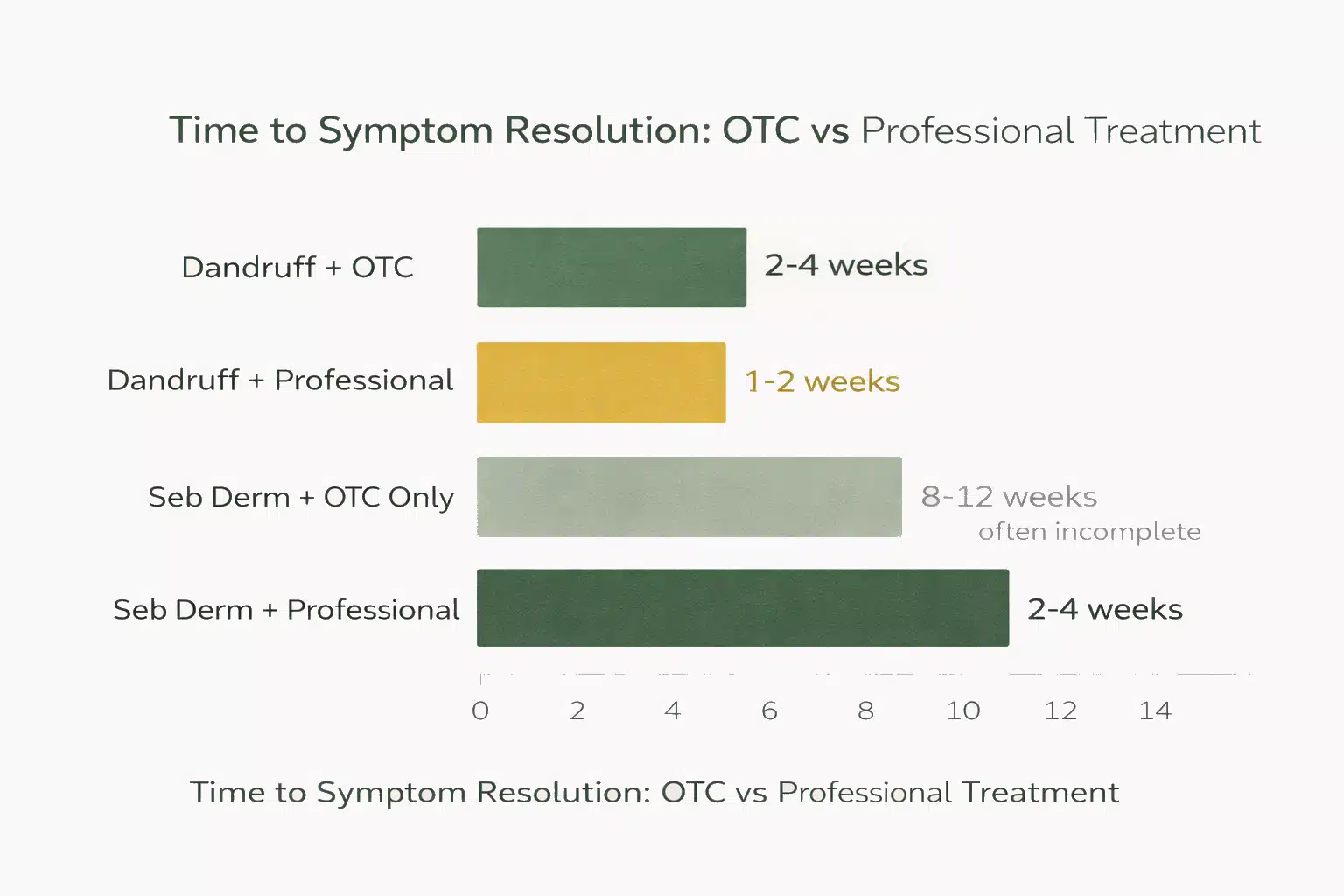
The National Eczema Association research shows that while dandruff and SD respond to similar treatments, seborrheic dermatitis often requires prescription-strength interventions.5
Red Flags: When to See a GP or Dermatologist
You should consider seeing a GP or dermatologist if:8
- Symptoms don’t improve after 2-4 weeks of consistent OTC treatment
- Flaking is greasy, yellowish, or particularly heavy
- You notice redness or inflammation
- Condition affects areas beyond your scalp
- Experiencing significant itching that disrupts sleep
- Seeing hair thinning or loss
- Patches drain fluid, form crusts, or become very red or painful
The Bottom Line
When half the adult population experiences these conditions, getting the diagnosis right isn’t just about individual health — it’s a public health imperative. The technology exists. The knowledge exists. The effective treatments exist.
What’s needed is awareness: awareness that “dandruff” is not always dandruff, awareness that symptoms deserve proper diagnosis, and awareness that you don’t have to live with chronic scalp discomfort when effective solutions are available.
If you’ve been treating “dandruff” for months without success, it’s time to question the diagnosis. Because the answer might not be a better shampoo — it might be finally understanding what you’re actually treating.
References
- Gupta, A. K., et al. (2024). Seborrheic Dermatitis. StatPearls. NCBI. Read the study
- Borda, L. J., & Wikramanayake, T. C. (2015). Seborrheic Dermatitis and Dandruff: A Comprehensive Review. J Clin Invest Dermatol. Read the study
- Ranganathan, S., & Mukhopadhyay, T. (2010). Dandruff: the most commercially exploited skin disease. Indian J Dermatol, 55(2), 130-134. Read the study
- Souza, E. N., et al. (2023). Sensitive Scalp and Trichodynia. Skin Appendage Disorders, 9(6), 407-415. Read the study
- National Eczema Association. (2023). Seborrheic Dermatitis — What the Latest Research is Saying. Read the article
- Wikramanayake, T. C., et al. (2019). Seborrheic dermatitis — Looking beyond Malassezia. Exp Dermatol, 28(9), 991-1001. Read the study
- Tao, R., et al. (2021). Skin microbiome alterations in seborrheic dermatitis and dandruff. Exp Dermatol, 30(10), 1546-1553. Read the study
- MedlinePlus. (2025). Seborrheic dermatitis. U.S. National Library of Medicine. Read the resource