
She was in the chair for a colour refresh when she mentioned it, almost as an aside. She had been on a combination of three prescription products for the past ten weeks. Alpicort E. Lanzetto. Xaloptic. We recognised one of them immediately — Lanzetto is a topical minoxidil solution, widely prescribed for pattern hair loss. The other two were less familiar.
We asked a few questions. She explained her dermatologist had prescribed the combination. She’d had a rough few weeks around weeks four and five — significant shedding, enough to make her consider stopping — but she had pushed through. Ten weeks in, she was starting to feel cautiously optimistic.
She left. We looked them up.
We want to be clear from the outset: we are hair professionals, not clinicians. What follows is what we found when we were curious enough to read the research — and what it changed about the questions we now ask.
Three Products, Five Pathways
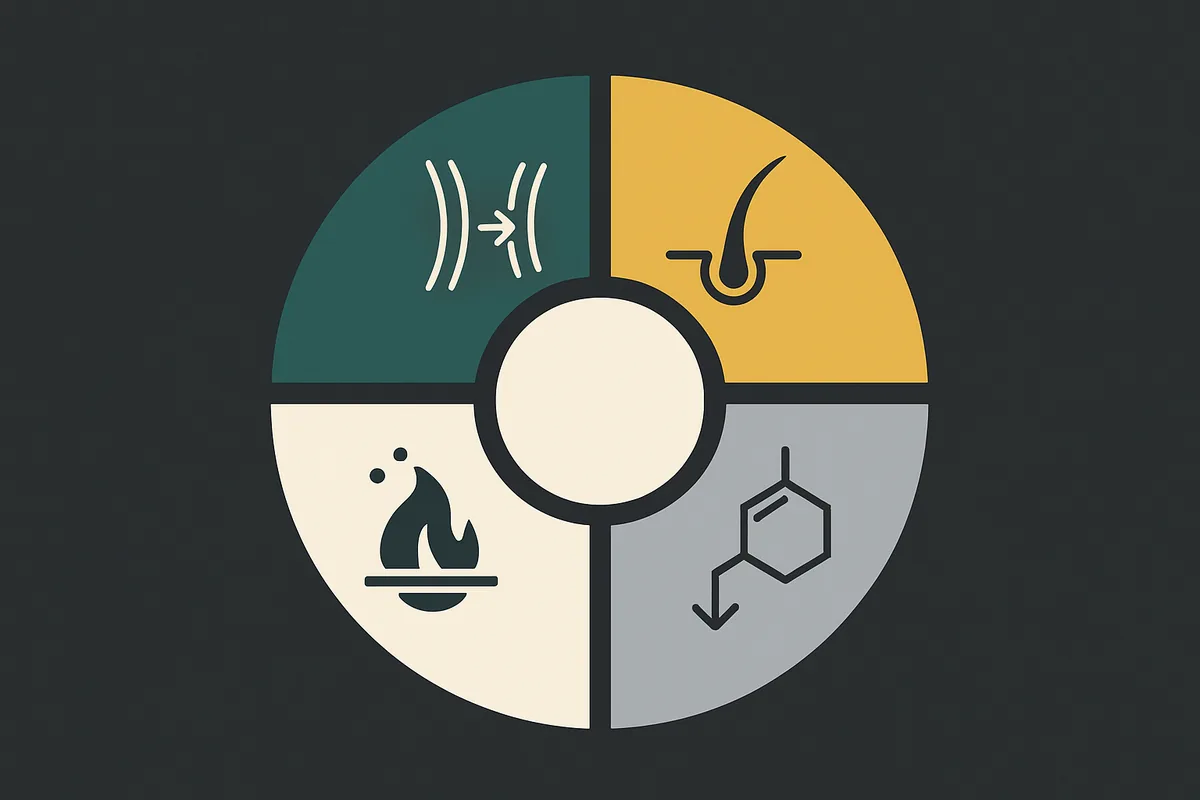
Alpicort E is a prescription topical solution containing three active ingredients: prednisolone (2mg/ml), estradiol (0.05mg/ml), and salicylic acid (4mg/ml). The prednisolone is an anti-inflammatory corticosteroid. The estradiol has anti-androgenic effects at the follicle level — relevant in androgenetic alopecia, where androgen sensitivity is associated with follicle miniaturisation over time. The salicylic acid acts as a keratolytic, clearing the scalp surface and supporting the penetration of other ingredients.
Lanzetto is topical minoxidil — the most clinically established hair loss treatment available, with decades of evidence behind it. It works primarily through vasodilation: widening blood vessels around the follicle to increase oxygen and nutrient delivery, while also extending the active growth phase of the hair cycle.
Xaloptic contains latanoprost — a prostaglandin F2α analogue originally developed as an eye drop for glaucoma. Its potential in hair recovery was first noticed when patients using it for glaucoma reported increased eyelash growth as a side effect. Research suggests it may prolong the anagen, or active growth, phase of the hair cycle — a mechanism distinct from anything else in the combination.
Together, the three products appeared to cover five separate biological pathways. We hadn’t encountered a combination quite like it before.
The Thing That Surprised Us
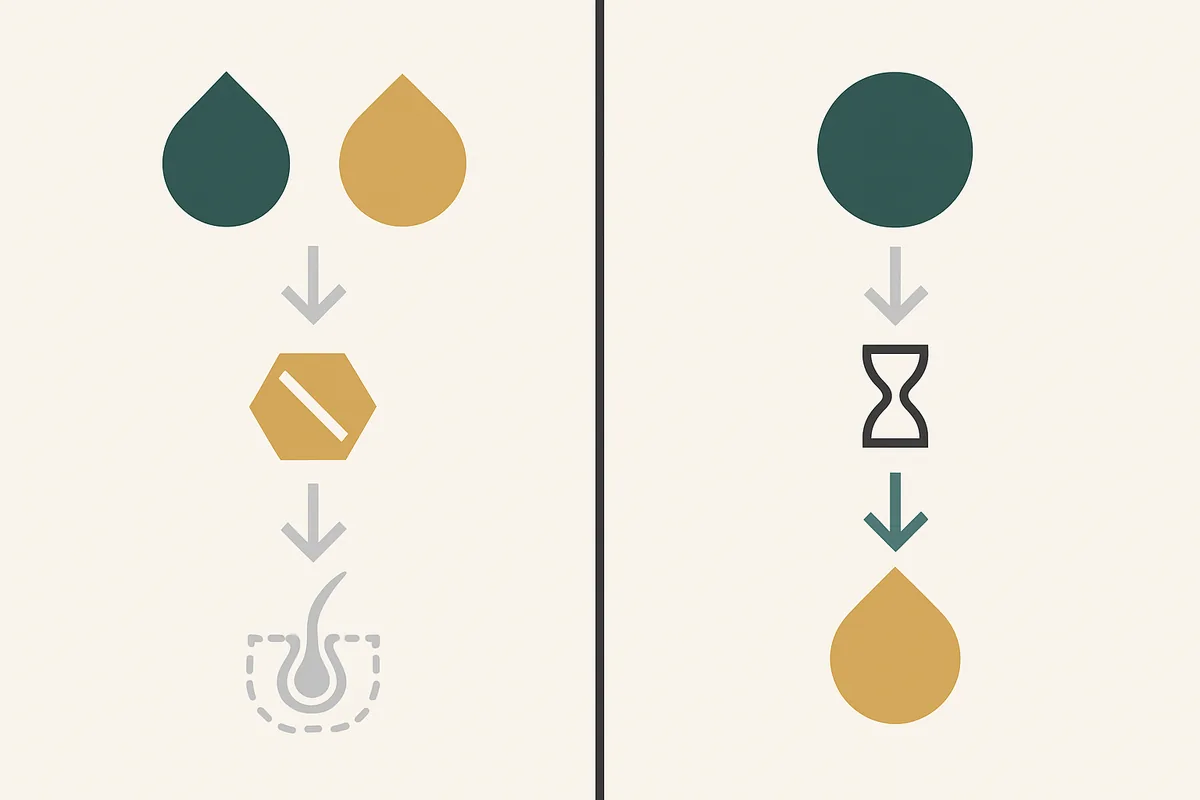
As we read further, something caught our attention that we hadn’t expected. Salicylic acid — the same ingredient in Alpicort E — is a suspected inhibitor of an enzyme called SULT1A1, the sulfotransferase found in hair follicles that converts topical minoxidil into its active form, minoxidil sulphate.1 Without adequate SULT1A1 activity, topical minoxidil may be less effective at the follicle level — a finding that has led researchers to investigate SULT1A1 activity as a predictor of minoxidil response in androgenetic alopecia patients.
We want to be precise about what the evidence does and does not say here. The inhibitory relationship between salicylic acid and sulfotransferase activity is drawn primarily from liver tissue studies, and the scalp-specific picture is less conclusive.1 This is a suspected interaction, not a confirmed clinical finding in a topical application context. But it raised a question we had not considered before: in a multi-product protocol like this one, does the sequence and timing of application matter?
From everything we read, the cautious answer appeared to be yes — at least in principle. Applying Alpicort E first and allowing time for absorption before applying Lanzetto seemed to be the more considered approach. Whether this produces a measurable clinical difference in scalp application remains to be established by further research. It was enough, however, to make us think differently about how layered protocols are applied in practice — and what may or may not be discussed when a prescription is written.
The Thing That Reassured Us
More encouraging was what we found on the latanoprost pairing. A 2022 randomised controlled trial evaluated latanoprost alongside minoxidil and betamethasone — a corticosteroid, as prednisolone in Alpicort E is — in patients with alopecia areata.4 It is important to note that alopecia areata is a different condition from pattern hair loss, and findings cannot be directly extrapolated. But the combination groups in that trial consistently showed greater improvement in hair regrowth scores than single-agent treatments, suggesting that latanoprost may act as a meaningful adjunct to both corticosteroids and minoxidil rather than simply duplicating their effects.
The biological logic of the combination she was using seemed sound. Each product appeared to be doing something genuinely different. The question was less about whether the logic made sense — it did — and more about whether it was being executed in a way that allowed each ingredient to work as intended.
The Shedding Conversation
When she described weeks four and five, we recognised what she had been through from the research: a phenomenon that has come to be known as “dread shed.”
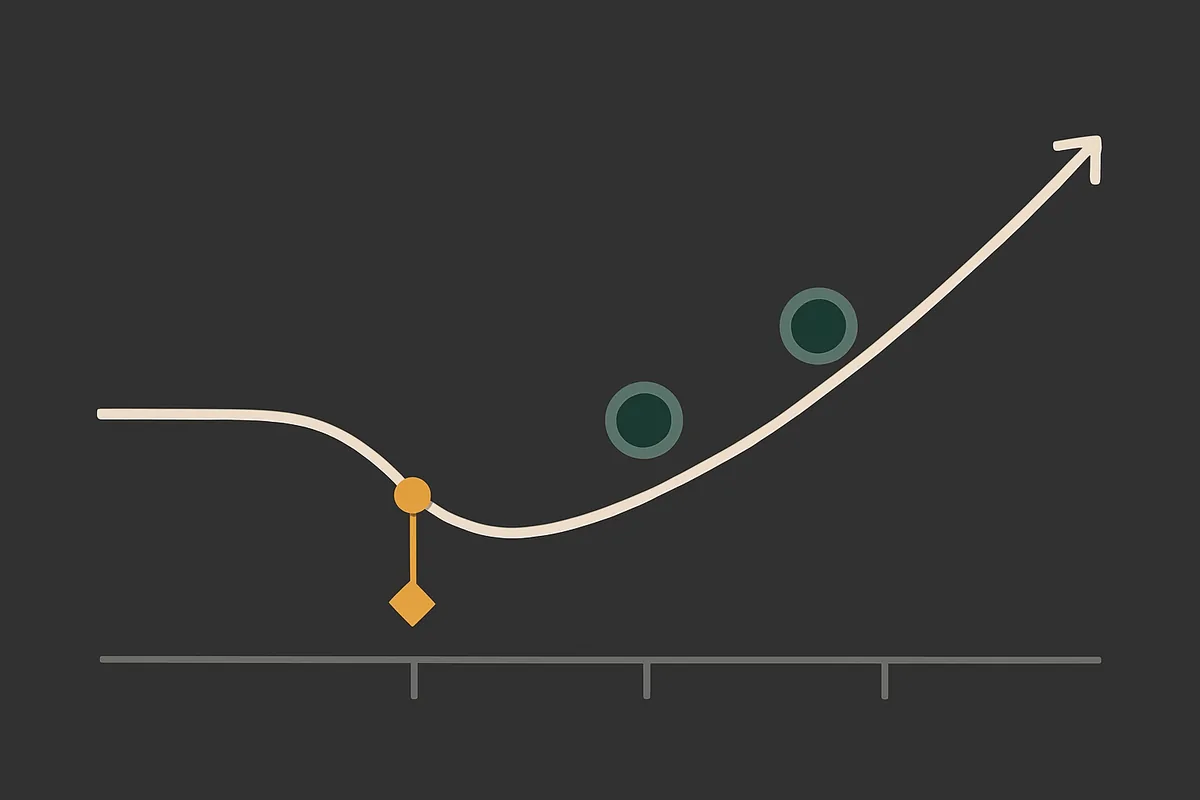
Minoxidil — in both topical and oral form — is associated with a temporary increase in hair shedding when treatment begins.3 The proposed mechanism involves a shortening of the telogen, or resting, phase of the hair cycle. Hairs that would have shed gradually over several months are instead released simultaneously, making way for incoming anagen growth. The shed is thought to typically begin two to four weeks after starting treatment and, for most people, patterns associated with it begin to resolve by weeks six to eight.
A 2024 study published in JAAD International specifically investigated whether maintaining topical minoxidil when beginning low-dose oral minoxidil might reduce this initial shed.2 The results were inconclusive — the overlap strategy did not significantly reduce dread shed rates in the study population of 115 patients. What the research did establish, however, is that the shed is a recognised clinical phenomenon with a relatively predictable timeline, not an indication that treatment is failing.
She nearly stopped at week five. The timing is particularly difficult: the shed peaks just before it tends to resolve, and most people — entirely understandably — interpret worsening shedding as evidence the protocol is not working.
We also came across a randomised trial comparing oral minoxidil at 1mg daily against topical minoxidil 5% solution in women with female pattern hair loss.5 After 24 weeks, the oral group showed a 12% increase in hair density compared to 7.2% for the topical group — a difference that was not statistically significant — but the oral group also reported less shedding overall. Low-dose oral minoxidil has since been studied in much larger cohorts, with one multicenter study of 1,404 patients finding that only 1.7% of participants discontinued treatment due to adverse effects.6 Whether a switch from topical to oral minoxidil might reduce the shed experience for some patients is a question worth raising with the prescribing clinician — it is not one we are in a position to answer.
What We Took Away
We came away from that afternoon’s research with two questions we now ask more consistently when a client mentions they are mid-protocol.
The first: what products are you using, and how are you using them together? Sequencing, timing, and application intervals are rarely discussed at the point of prescription. Individual products are prescribed on their own merits. The practical question of how to apply multiple topicals to the same scalp — in what order, with what intervals — tends not to be addressed. For single-product protocols, it likely makes little difference. For more complex combinations, it may matter more than anyone has formally established.
The second: do you know what to expect in the first six to eight weeks? If she hadn’t mentioned the shedding, we would not have known she nearly stopped. And if she had stopped — at precisely the point where the research suggests resolution is imminent — the question of whether the protocol was working may never have been answered.
Why a Baseline Changes the Experience
There is no reliable way to know, without a documented record, whether shedding during a treatment protocol represents expected biological turnover or genuine deterioration. The two can feel identical. The anxiety they produce is the same.
What changes the experience is having a documented starting point. Hair density recorded before treatment begins — and reviewed again at weeks four, eight, and twelve — transforms the shed phase from a subjective and frightening event into something a clinician can evaluate with reference to an objective record. Either the follicle count is recovering on the expected trajectory, or it warrants clinical review. Either way, there is something concrete to work from.
We are not in a position to tell a client whether her combination is working, or whether it is being applied in the sequence that most helps each ingredient. What a baseline record can do is make it possible for her dermatologist to answer those questions with evidence rather than impression.
That afternoon’s conversation reminded us why that matters.
References
- Goren A, et al. (2022). Sulfotransferase SULT1A1 activity in hair follicle, a prognostic marker of response to the minoxidil treatment in patients with androgenetic alopecia: a review. PMC Open Access Review. Read study
- Nohria A, Desai D, Sikora M, Mandal S, Shapiro J, & Lo Sicco K. (2024). Combating “dread shed”: The impact of overlapping topical and oral minoxidil on temporary hair shedding during oral minoxidil initiation. JAAD International, 15, 220–224. Read study
- Patel P, Nessel TA, & Kumar DD. (2023). Minoxidil. In: StatPearls [Internet]. StatPearls Publishing. Read study
- Ghassemi M, Yazdanian N, Behrangi E, Jafari M, & Goodarzi A. (2022). Comparison of efficacy, safety and satisfaction of latanoprost versus minoxidil, betamethasone and in combination in patients with alopecia areata: A blinded multiple group randomised controlled trial. Dermatologic Therapy, 35(12), e15943. Read study
- Ramos PM, Sinclair RD, Kasprzak M, & Miot HA. (2020). Minoxidil 1mg oral versus minoxidil 5% topical solution for the treatment of female-pattern hair loss: A randomised clinical trial. Journal of the American Academy of Dermatology, 82(1), 252–253. Read study
- Vañó-Galván S, Pirmez R, Hermosa-Gelbard A, et al. (2021). Safety of low-dose oral minoxidil for hair loss: A multicenter study of 1404 patients. Journal of the American Academy of Dermatology, 84(6), 1644–1651. Read study